


Not long ago, many people living with chronic conditions like diabetes, arthritis, or heart disease were dealing with the same daily challenges. Symptoms were difficult to track consistently. Medication routines were easy to miss. Access to care often meant waiting days or even weeks for the next appointment.
For patients and their families, this created a constant sense of uncertainty. Managing a long term condition at home felt reactive rather than controlled.
So the question is simple.
Can people manage chronic diseases at home with the same level of confidence they would expect from in-person care?
The short answer is yes. And increasingly, it is becoming the standard.
AI-powered health apps are now helping patients monitor symptoms, stay on track with treatment, and receive timely insights without needing to visit a clinic for every update. What used to require multiple appointments can now happen in real time, from home.
Why Managing Chronic Diseases at Home Has Always Been Challenging

Chronic disease management has never been just about treatment. It is about consistency.
Conditions like diabetes or hypertension require ongoing monitoring, lifestyle adjustments, and timely intervention when something changes. In practice, this is where many patients struggle.
Without continuous support, small gaps begin to appear. A missed dose here. An untracked symptom there. Over time, these small issues can lead to complications that could have been prevented.
In healthcare systems across Canada and the United States, access is another factor. Even in well-developed systems, patients often rely on scheduled visits rather than continuous feedback. This makes it harder to respond early.
This is exactly the gap AI is starting to fill.
The Hidden Gaps in Everyday Chronic Care
Beyond simple tracking, many patients also struggle with recognising subtle changes in their condition. Small shifts in sleep quality, energy levels, or symptom frequency often go unnoticed until they develop into something more serious. In traditional care models, these early signals are easy to miss because they are scattered across time and not always captured during short clinical visits.
At the same time, healthcare systems in countries like Canada and the United States are often under pressure, which means follow-up care can feel fragmented. Patients are expected to manage a significant part of their condition on their own, which makes reliable at-home support tools even more important in maintaining stability and preventing avoidable complications.
How AI Apps Are Changing At-Home Care
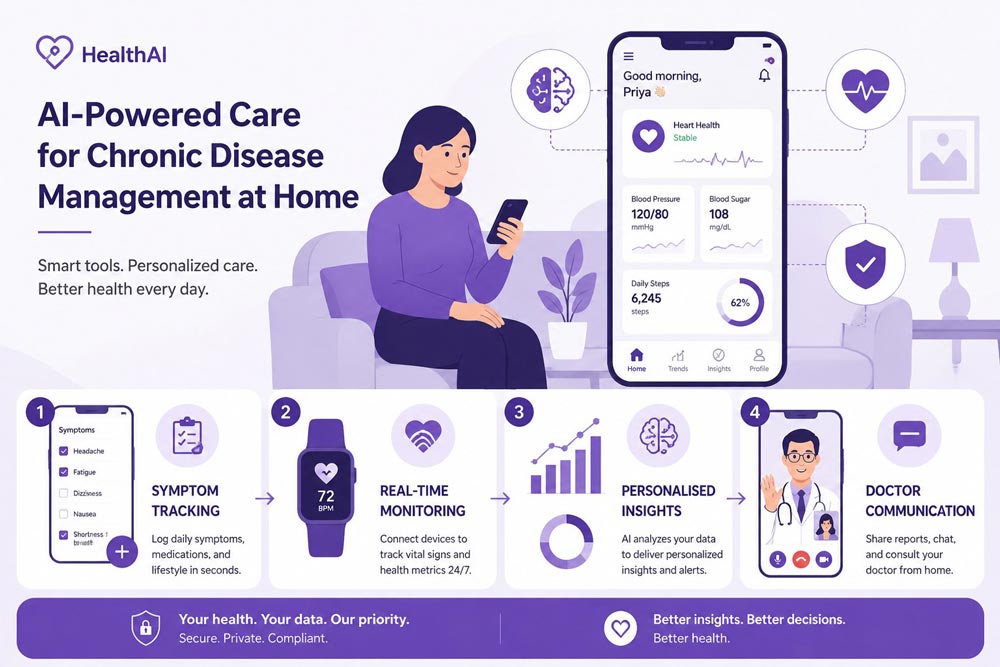
AI health apps are not replacing doctors. They are extending care into the patient’s daily routine.
Instead of relying only on periodic checkups, patients can now use apps that continuously collect and analyse data. This includes things like heart rate, glucose levels, activity patterns, and even sleep quality.
Over time, these apps learn what is normal for each individual. When something changes, they can flag it early and suggest appropriate actions.
Here is a simple comparison of how this shift looks in practice:
This shift is not just about convenience. It is about giving patients a clearer sense of control.
Beyond monitoring and alerts, one of the most practical shifts has been in how patients understand their own data. Instead of seeing raw numbers or isolated readings, AI systems can translate patterns into simple, actionable insights. For someone managing hypertension, this might mean recognising how daily habits are affecting long term trends rather than reacting only when symptoms worsen.
As more patients begin to rely on real-time insights, the real challenge is not access to data, but knowing how to use it effectively in daily care.
If you're exploring how AI-driven tools can fit into your routine, platforms like Innomed are designed to make this transition simpler by turning complex health data into clear, actionable guidance.
Key Ways AI Apps Support Patients
Here's a list of the most important ways that AI can help people with chronic diseases:
Continuous Monitoring Without Extra Effort
Many AI apps integrate with wearable devices or simple input systems. This allows patients to track their condition throughout the day without adding extra complexity.
For example, someone managing diabetes can receive regular updates about glucose trends instead of relying on occasional checks.
Personalised Insights Instead of Generic Advice
Traditional care often relies on general guidelines. AI changes this by analysing individual data over time.
Instead of broad recommendations, patients receive insights based on their own patterns. This makes the advice more relevant and easier to follow.
Early Detection of Potential Issues
One of the most valuable benefits is early warning.
If a patient’s data starts to shift in a way that suggests risk, the app can highlight it before symptoms become severe. In many cases, this allows for simple adjustments instead of emergency care.
Better Communication with Healthcare Providers
AI apps can organise patient data in a way that is easy to share with clinicians.
Instead of relying on memory during appointments, patients can provide clear, structured information. This leads to more informed decisions and more efficient consultations.
Where Innomed Fits into This Shift

As healthcare continues to move beyond clinic walls, companies like Innomed are focusing on making these tools more practical and accessible.
The goal is not to overwhelm patients with technology, but to simplify daily management and to ease the processes. By combining AI with user-friendly design, platforms like Innomed help patients stay consistent without feeling burdened.
In a system where time and access are often limited, this kind of support becomes increasingly important.
What This Means for Patients in North America
For patients across Canada and the United States, the shift toward AI-supported care is already underway.
It does not replace healthcare providers. Instead, it fills the gaps between visits.
This leads to:
- Fewer unnecessary hospital visits
- Better day to day condition management
- Increased confidence in handling long term health
Over time, these improvements can make a meaningful difference in both quality of life and healthcare outcomes.
From Reactive Care to Proactive Health Management
As these tools continue to evolve, the focus is gradually moving from reactive treatment to proactive health management. This does not remove the need for medical professionals, but it changes the rhythm of care. Instead of waiting for problems to escalate, patients and providers can now respond earlier, often before a situation becomes critical.
Conclusion
Managing chronic disease has always required consistency, awareness, and timely action. What has changed is how achievable those things are at home.
AI apps are not a future concept. They are already helping patients take a more active role in their care, with better information and fewer delays.
For many, this shift turns management from something reactive into something more controlled and predictable.
For patients and healthcare providers looking to move beyond reactive care, the next step is not more data, but better interpretation.
Innomed focuses on making AI-powered health management practical in everyday life, helping you stay consistent, informed, and in control between clinical visits.
FAQs About AI Helping People with Chronic Diseases
Are AI health apps safe to use for chronic disease management?
Most reputable apps follow strict data privacy and medical guidelines. However, they should be used as a support tool, not a replacement for professional medical advice.
Do these apps replace doctors?
No. They support patients between visits and provide additional insights, but medical decisions should always involve a healthcare provider.
Which conditions benefit the most from AI apps?
Conditions that require ongoing monitoring, such as diabetes, hypertension, and heart disease, tend to benefit the most.
Are AI health apps widely used in Canada?
Yes. Adoption is growing quickly as healthcare systems look for ways to improve access and reduce pressure on clinics.
Do patients need advanced technical skills to use these apps?
Most modern apps are designed to be user-friendly, with simple interfaces that do not require technical expertise.