


New moms are not struggling with lack of information. They are struggling with interpreting signals in real time. A slight change in breathing, a different cry, or an unusual sleep pattern can trigger uncertainty, especially in the first months. This is where AI monitoring tools have quietly changed the dynamic at home.
AI-powered baby monitoring systems track patterns, not just events. They build a baseline of normal behavior and flag deviations when something shifts. Instead of reacting to isolated moments, parents respond to trends.
Quick Answer:
AI baby monitoring helps new moms track breathing, sleep, feeding, and environment in real time by building behavioral baselines and alerting them to changes. It reduces guesswork and improves response speed, but it does not replace pediatric care.
The New Reality of Parenthood: Technology as a Safety Net
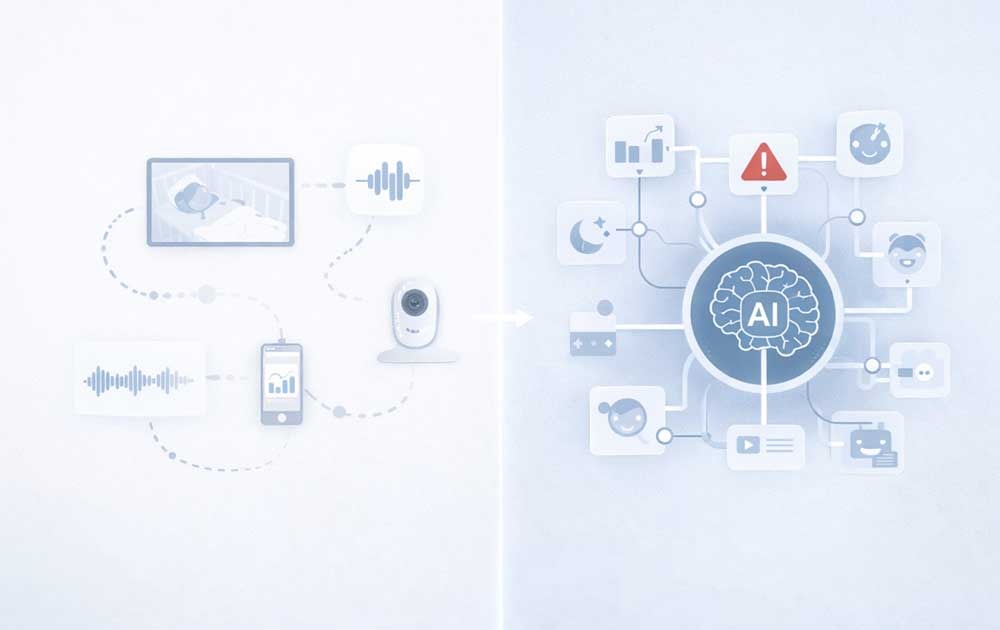
It’s not easy to be a parent. But technology is here to male it a little easier.
Why New Parents Are Turning to AI Tools
New moms are not asking for more data. They are trying to reduce uncertainty in moments that require immediate decisions.
In the early weeks, almost every signal feels critical. A pause in breathing, a sudden cry, or a skipped feeding creates hesitation. The problem is not observation. It is an interpretation.
AI systems address this gap by shifting focus from isolated events to patterns. Instead of reacting to one moment, the system evaluates behavior over time. It builds a baseline for what is normal for that specific baby.
Once that baseline is established, the system flags deviations. This is where the real value appears. Parents are no longer guessing whether something is different. They are responding to a detected change.
This reduces delayed reactions and unnecessary panic at the same time.
From Sleepless Nights to Smart Alerts
Night monitoring is one of the most exhausting parts of early parenthood.
Parents often wake up repeatedly to check breathing, movement, or sleep position. Even when everything is normal, the lack of certainty prevents rest.
AI-powered monitors reduce this cycle by filtering signals before they reach the parent.
Instead of continuous checking, the system:
- Tracks breathing and movement continuously
- Detects irregular patterns based on historical data
- Sends alerts only when a deviation crosses a defined threshold
This changes the experience from constant vigilance to conditional awareness.
The difference is practical. Instead of checking ten times per night, the parent responds only when the system detects something outside the expected range.
Over time, this improves sleep quality for the parent without reducing attention to the baby.
What Can AI Actually Monitor for Your Baby?
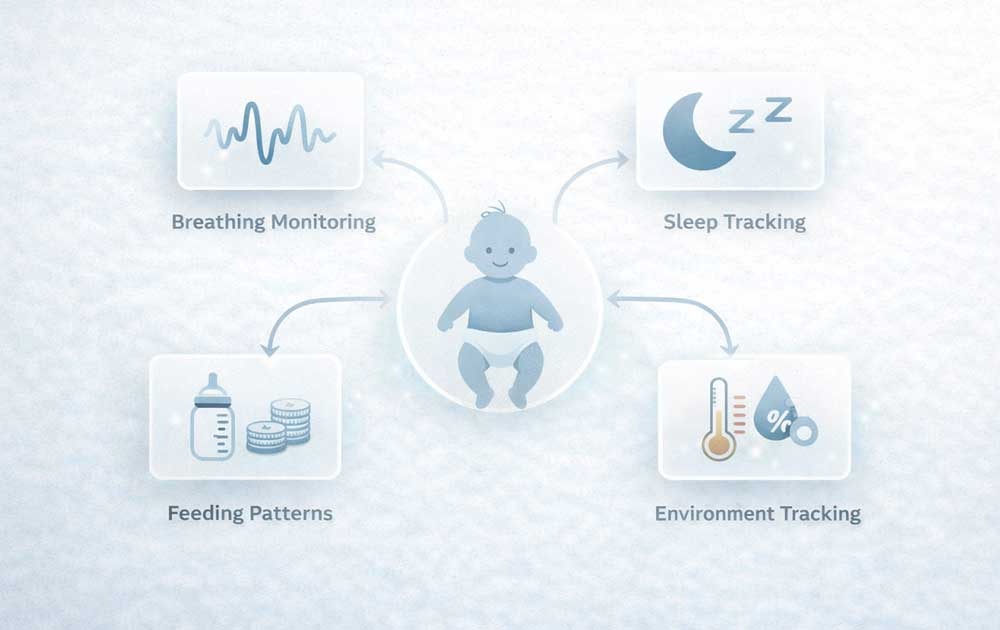
We all know that AI hasn’t reached the point to do everything by itself, especially when it’s about a sensitive topic like a baby. So, what can they really do?
Breathing and Movement During Sleep
Sleep monitoring is the foundation of most AI baby tools.
Sensors and computer vision models track micro-movements during sleep. These include chest motion, body position, and periods of stillness.
The system analyzes these signals in context. It does not react to a single pause. It evaluates duration, frequency, and deviation from the baby’s normal pattern.
If breathing becomes irregular or movement drops below expected levels, the system triggers an alert.
This is not a diagnosis. It is early signal detection.
For newborns who spend most of their time sleeping, this layer provides continuous visibility without requiring constant manual checks.
Feeding Patterns and Growth Tracking
Feeding is one of the most important indicators of newborn health.
AI tracking tools log feeding sessions across time. This includes:
- Feeding duration
- Time intervals between sessions
- Intake estimates when integrated with smart devices
Over time, the system identifies trends.
A single short feeding session may not matter. A pattern of reduced intake across multiple sessions does.
This distinction helps parents avoid overreacting to isolated events while still catching meaningful changes early.
It also supports routine building. Consistent feeding patterns improve both baby health and parental planning.
Crying Analysis: What Different Cries Mean
Crying analysis uses audio recognition models trained on sound patterns.
The system analyzes pitch, tone, rhythm, and intensity. Based on these variables, it classifies likely causes of crying.
Common categories include hunger, discomfort, fatigue, and distress.
Accuracy varies depending on the model and environment. Background noise, recording quality, and baby-specific variation all affect results.
Even with these limitations, the feature reduces trial-and-error responses.
Instead of guessing from scratch, parents start with a probable cause and adjust from there.
This shortens response time and improves consistency in care.
Temperature and Environment Monitoring
Environmental conditions directly affect sleep quality and comfort.
AI-enabled monitors track key variables:
- Room temperature
- Humidity levels
- Air quality in advanced systems
These factors are evaluated continuously. When conditions move outside recommended ranges, the system sends alerts.
This prevents gradual changes from going unnoticed.
For example, a slow drop in temperature overnight may not be obvious, but it can disrupt sleep. AI systems detect and flag this shift early.
Maintaining a stable environment reduces sleep disruptions and supports overall well-being during early development.
How Accurate Are AI Baby Monitoring Systems in Real Life?
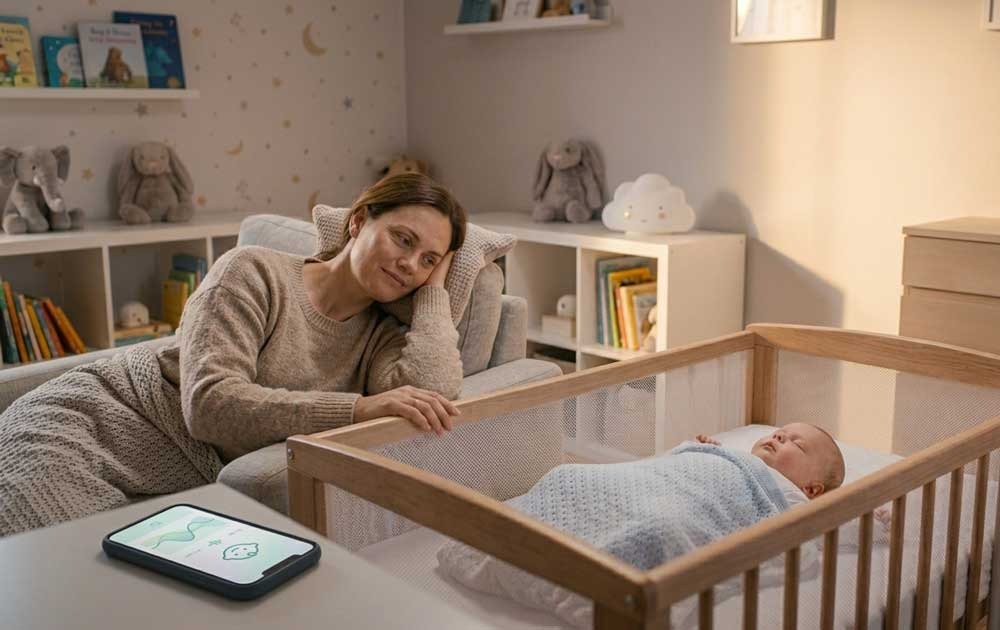
Accuracy in AI baby monitoring depends on context, not just technology. These systems perform best when they learn from consistent, high-quality data over time. A stable environment, clear audio input, and uninterrupted tracking improve reliability significantly.
However, no system operates without limitations. False positives are common, especially in the early days before the model builds a reliable baseline. A temporary change in sleep position or a short pause in movement may trigger an alert without indicating a real issue.
There is also the risk of false reassurance. A system that shows stable patterns does not guarantee that all health concerns are absent. Some conditions develop without immediate behavioral signals, which means AI may not detect them early.
The key distinction is between detection and diagnosis. AI tools detect changes in patterns. They do not interpret medical meaning. When used correctly, they provide early signals that support awareness. When overtrusted, they can delay necessary action.
Popular AI-Powered Baby Monitoring Devices
Considering using one of these tools and don’t know which to use? Let’s have a look at the best options.
Smart Baby Monitors with AI Alerts
Camera-based monitors have evolved beyond simple video streaming. They now analyze movement, sleep position, and behavioral patterns in real time.
The key difference is not visibility. It is an interpretation. A standard monitor shows the baby. An AI-enabled monitor evaluates what it sees and flags changes.
These systems learn over time. They adjust sensitivity based on the baby’s normal patterns. This reduces false alerts and improves relevance.
For most families, this category provides the best balance between ease of use and meaningful insight. It requires minimal setup and does not rely on direct physical contact with the baby.
Wearable Sensors for Newborns
Wearable devices focus on biometric tracking rather than visual observation. They attach to the baby and collect continuous physiological data.
These devices track signals such as heart rate and movement patterns. Some advanced models also monitor oxygen levels.
The strength of wearables lies in their consistency. They provide uninterrupted data even in low-visibility conditions, such as during the night or when the baby is covered.
However, they introduce a different consideration. Continuous biometric monitoring can increase parental anxiety if alerts are not well-calibrated. The value depends heavily on how the system communicates risk.
For parents who want deeper monitoring beyond movement and sleep, wearables offer an additional layer of visibility.
AI-Powered Health Tracking Apps
Apps act as the central layer that connects different types of data.
They combine feeding logs, sleep data, and behavioral tracking into a single interface. Some rely entirely on manual input, while others integrate with devices.
The real advantage is pattern recognition across categories. Instead of looking at sleep or feeding in isolation, the system correlates them.
For example, changes in sleep patterns may align with feeding irregularities. Identifying this relationship manually is difficult. AI systems detect it automatically.
This creates a more complete picture of the baby’s daily rhythm.
Privacy and Data Security in AI Baby Monitoring Devices
Most AI baby monitoring systems rely on continuous data collection. This includes video, audio, and behavioral patterns stored over time. Where this data is processed and stored plays a critical role in overall safety.
Some devices process data locally, keeping information within the home network. Others rely on cloud-based systems, where data is transmitted and stored on external servers. Cloud systems often provide more advanced analysis, but they introduce additional exposure risks.
Unauthorized access, weak encryption, or poor data management practices can turn a monitoring device into a privacy concern. This is especially relevant for camera-based systems connected to the internet.
Parents need to evaluate not only features but also data policies. Choosing devices from established brands with clear security standards reduces risk. Regular software updates, strong passwords, and secure network setups further protect access.
AI monitoring improves visibility, but it also expands the digital footprint of the household. Managing that footprint is part of responsible use.
What AI Cannot Replace: The Importance of Pediatric Care
AI systems operate within defined parameters. They analyze patterns, detect deviations, and generate alerts. They do not understand medical context in the way a pediatrician does.
A stable pattern does not guarantee the absence of a problem. Some conditions develop without clear behavioral signals. Relying solely on AI can delay necessary medical attention.
False alerts also remain part of the system. Not every deviation indicates a real issue. Without clinical judgment, it is difficult to distinguish between noise and meaningful change.
Pediatric care provides interpretation that AI cannot deliver. Physical examination, medical history, and developmental assessment all contribute to accurate diagnosis.
The correct role of AI is supportive. It extends observation between medical visits and helps parents notice changes earlier. It does not replace professional evaluation.
When Should Parents Actually Act on AI Alerts?
Not every alert requires immediate action. AI systems are designed to detect deviations, not to classify urgency with clinical precision. Understanding how to respond is essential for avoiding both overreaction and delay.
A single alert often reflects a temporary change. Babies shift positions, adjust breathing patterns, and move unpredictably during sleep. In many cases, the system flags a deviation that resolves on its own within seconds or minutes.
Patterns matter more than isolated events. Repeated alerts within a short time frame, or changes that persist across multiple monitoring cycles, require closer attention. This is where escalation becomes necessary.
The practical approach is layered. First, observe the baby directly. Second, monitor whether the alert repeats or stabilizes. Third, if the pattern continues or worsens, contact a healthcare provider.
AI shortens the time between change and awareness. It does not replace judgment. Parents remain the final decision point in interpreting and acting on alerts.
How AI Helps Moms Take Care of Their Own Health Too

The impact of AI monitoring extends beyond the baby.
Reduced uncertainty changes how mothers experience the early months. Constant checking and second-guessing create cognitive fatigue. When monitoring becomes structured, mental load decreases.
Improved sleep is one of the most immediate effects. When alerts are reliable, parents stop waking up to verify every small movement. This leads to longer and more consistent rest periods.
Stress levels also shift. Knowing that a system is tracking key signals reduces background anxiety. The parent remains attentive without being overwhelmed.
Some platforms also include maternal tracking features. These focus on sleep quality, recovery patterns, and daily routines.
The benefit is indirect but important. A more rested and less anxious parent is better equipped to provide consistent care.
Frequently Asked Questions
Is it safe to use AI devices on a newborn?
FDA or Health Canada-cleared devices are tested for safety. Always choose certified products and follow manufacturer guidelines.
Can AI replace regular pediatrician visits?
No. AI tools complement professional care but cannot replace your pediatrician's expertise.
What is the best AI baby monitor?
Popular options include Nanit, Owlet, and Miku, each with different AI features. We compare them in our detailed article.
Does AI baby monitoring actually reduce SIDS risk?
While no device can prevent SIDS, AI monitors can alert parents to breathing irregularities faster than traditional monitors.
Do parents need multiple AI devices at the same time?
In most cases, one well-designed system provides sufficient coverage. Additional devices add complexity and may not improve outcomes unless there is a specific need.